Room Heater Electricity Bill Calculator
Estimate how much electricity your room heater uses and calculate its daily, monthly and yearly running cost based on wattage, usage hours and electricity rate.
Recommended Products
Explore useful products and compare available options before choosing the right one.
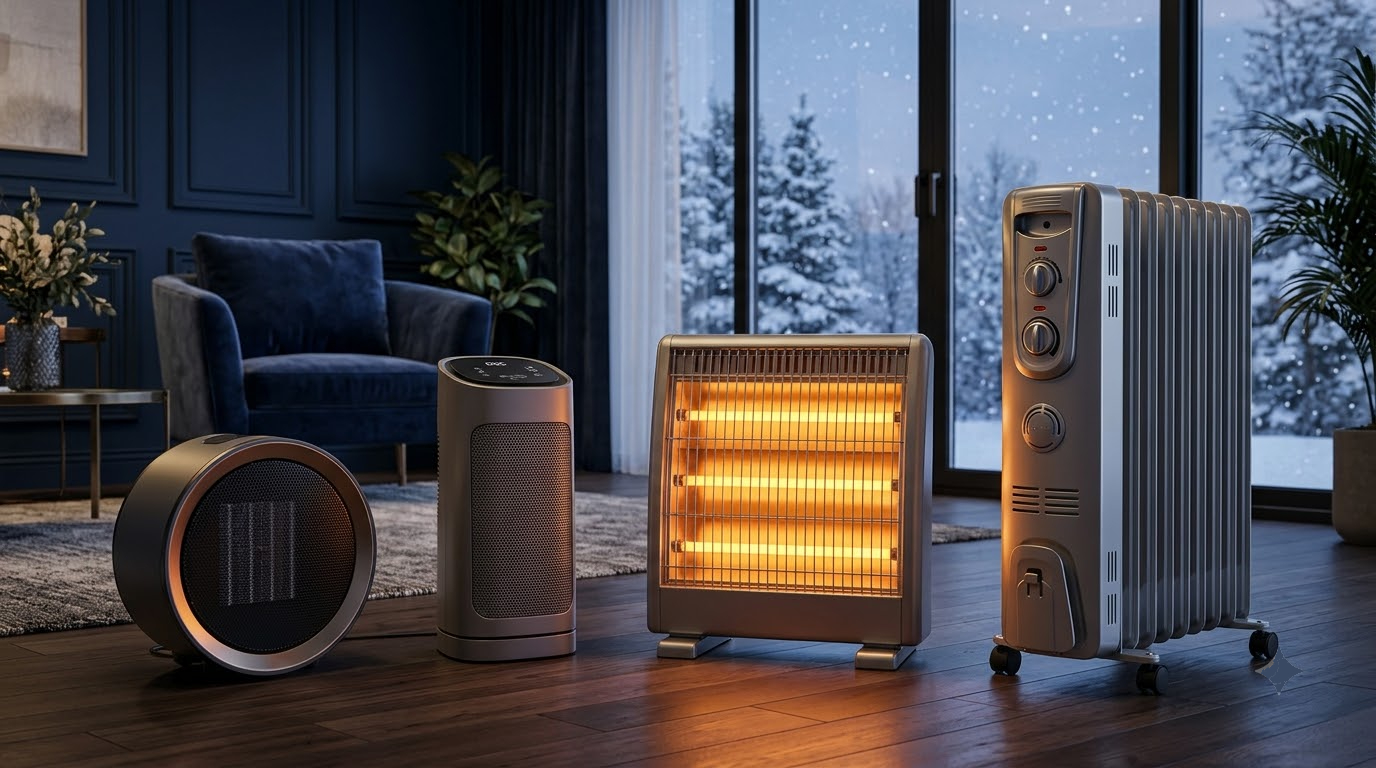
Recommended Room Heaters for Home
Explore different types of room heaters for your home. Compare fan heaters, halogen heaters, quartz heaters and oil-filled radiators to find a suitable option.
What Is a Room Heater?
A room heater helps keep your home warm during cold winter days. Many households in India use an electric room heater in bedrooms, living rooms, and study areas to stay comfortable when temperatures drop.
However, running a room heater for several hours can increase your electricity bill. The actual cost depends on the heater's wattage, daily usage, and your electricity rate. Our Room Heater Electricity Bill Calculator helps you estimate how much electricity your heater uses and how much it may add to your monthly bill.
There are different types of room heaters, such as fan heaters, blower heaters, halogen heaters, quartz heaters, and oil-filled radiators. They use different heating methods, but their electricity consumption mainly depends on their power rating (watts) and how long you use them.
How Much Electricity Does a Room Heater Use?
The electricity consumption of a room heater depends on its wattage and how many hours you use it each day. Electricity consumption is measured in kilowatt-hours (kWh), commonly called units on electricity bills in India.
One electricity unit equals 1 kWh. Here is how much electricity different room heaters use in one hour:
- 1000 Watt Room Heater: Uses 1 unit of electricity per hour.
- 1500 Watt Room Heater: Uses 1.5 units of electricity per hour.
- 2000 Watt Room Heater: Uses 2 units of electricity per hour.
- 2500 Watt Room Heater: Uses 2.5 units of electricity per hour.
For example, if you use a 2000-watt room heater for 5 hours a day, it will consume approximately 10 units of electricity daily. Over 30 days, this can add up to 300 units.
Keep in mind that the actual electricity consumption may be lower if your heater has a thermostat that automatically switches the heating element on and off to maintain the desired temperature. Using a lower heat setting can also reduce power consumption.
Room Heater Electricity Consumption Per Hour
| Heater Wattage | Electricity Consumption Per Hour | Estimated Cost Per Hour (at ₹8/Unit) |
|---|---|---|
| 400 Watts (0.4 kW) | 0.4 Units (kWh) | ₹3.20 |
| 800 Watts (0.8 kW) | 0.8 Units (kWh) | ₹6.40 |
| 1000 Watts (1.0 kW) | 1.0 Unit (kWh) | ₹8.00 |
| 1200 Watts (1.2 kW) | 1.2 Units (kWh) | ₹9.60 |
| 1500 Watts (1.5 kW) | 1.5 Units (kWh) | ₹12.00 |
| 2000 Watts (2.0 kW) | 2.0 Units (kWh) | ₹16.00 |
| 2500 Watts (2.5 kW) | 2.5 Units (kWh) | ₹20.00 |
| 3000 Watts (3.0 kW) | 3.0 Units (kWh) | ₹24.00 |
1000W, 1500W and 2000W Room Heater Electricity Bill
To help you understand how daily room heating impacts your monthly electricity expense, the table below provides a practical comparison of the most popular wattage ratings in India. This calculation assumes an average of 4 hours of daily usage across 30 winter days at an average tariff rate of ₹8 per unit (kWh):
| Heater Wattage | Daily Consumption (4 Hrs) | Monthly Consumption (30 Days) | Monthly Estimated Bill (at ₹8/Unit) |
|---|---|---|---|
| 1000 Watts (1 kW) | 4.0 Units | 120 Units | ₹960 |
| 1500 Watts (1.5 kW) | 6.0 Units | 180 Units | ₹1,440 |
| 2000 Watts (2 kW) | 8.0 Units | 240 Units | ₹1,920 |
| 2500 Watts (2.5 kW) | 10.0 Units | 300 Units | ₹2,400 |
Electricity Consumption of Different Types of Room Heaters
Fan Heater (Ceramic / PTC Blower)
Fan heaters (also referred to as ceramic blowers or convection fan heaters) use an internal fan to blow air across heated ceramic PTC elements or wire coils. They provide rapid, forced-air heating, making them popular for quick warm-ups in compact spaces.
Standard fan heaters are typically rated at 1000W to 2000W. While the blower motor itself consumes only a small amount of electricity (around 20W to 35W), the heating element consumes the vast majority of power. At 2000W full load, a fan heater uses 2 units per hour. Because fan heaters do not store heat, the room cools quickly once turned off.
Halogen Heater
Halogen heaters utilize halogen-filled lamps or tubes to emit instant infrared radiant heat. Rather than heating the surrounding air directly, halogen heaters warm up objects and people situated directly in the path of the radiation.
Most halogen heaters in India feature 2 to 3 separate tubes rated at 400W each (totalling 800W or 1200W). If only one tube is switched on, it consumes just 0.4 units per hour. If all three tubes are active, it consumes 1.2 units per hour. They are energy-efficient for focused, personal spot heating because you feel warmth instantly without having to heat the whole volume of air in a large room.
Quartz Heater
Quartz heaters are another form of radiant electric heater where heating filaments are encased in protective quartz glass tubes. Similar to halogen models, quartz heaters deliver directional infrared warmth.
They typically operate at 400W (single rod) or 800W (dual rod). Running a dual-rod quartz heater on full power consumes 0.8 units per hour (costing approximately ₹6.40 per hour at ₹8/unit). While economical in power draw, they provide targeted spot warmth rather than uniform room heating.
Oil Filled Room Heater (OFR)
Oil-filled room heaters (OFR) use electrical heating elements submerged in a specialized diathermic mineral oil inside multi-fin radiator panels. The oil is never burned or consumed; it acts purely as a high-heat-capacity thermal reservoir.
OFR heaters are commonly rated between 1500W, 2000W, and 2500W (often with 9, 11, or 13 fins, and sometimes an optional 400W PTC fan heater). Crucial fact: A 2000W oil heater does not inherently consume more or less power than a 2000W fan heater when operating continuously at 2000W. However, because the hot oil retains thermal energy for a prolonged period, an OFR heater continues to radiate gentle warmth even when the thermostat cuts power off, resulting in stable temperatures, noiseless operation, and preserved indoor humidity.
Room Heater Price in India and Buying Guide
The price of a room heater in India depends on its type, wattage, brand, and features. Before buying the best room heater for home, it is important to consider both the purchase price and the electricity cost of running it.
- Quartz and Halogen Heaters: These are generally affordable options for personal heating. They are suitable for warming a small area, such as a space near your bed or study table.
- Fan and Blower Heaters: These heaters use a fan to spread warm air around the room. Many models come with 1000W and 2000W heat settings and are suitable for quick heating.
- Oil Filled Radiators (OFR): These heaters usually cost more than other types. They provide quiet heating and continue to release warmth for some time after switching off.
Room heater prices can vary between brands and models. Before buying an electric room heater, compare its wattage, thermostat, safety features, warranty, and suitability for your room size. Also consider how many hours you plan to use it, as electricity consumption can add to your monthly household expenses.
How to Calculate Room Heater Electricity Cost
You can easily calculate your room heater electricity cost using three details: the heater's wattage, the number of hours you use it daily, and your electricity rate per unit. This helps you estimate both daily and monthly electricity expenses.
Room Heater Electricity Cost Formula:
Daily Units (kWh) = (Wattage × Hours Used Per Day × Number of Heaters) / 1000
Monthly Units (kWh) = Daily Units × Number of Days
Monthly Electricity Cost (₹) = Monthly Units × Electricity Rate Per Unit
Room Heater Electricity Cost Example:
Suppose you use one 2000 Watt room heater for 4 hours every day for 30 days. If your electricity rate is ₹8 per unit, the estimated electricity cost will be:
- Step 1 (Daily Consumption): (2000 W × 4 Hours × 1) / 1000 = 8 units per day.
- Step 2 (Monthly Consumption): 8 Units × 30 Days = 240 units per month.
- Step 3 (Daily Electricity Cost): 8 Units × ₹8 = ₹64 per day.
- Step 4 (Monthly Electricity Cost): 240 Units × ₹8 = ₹1,920 per month.
These are estimated values based on continuous operation at 2000 watts. Actual electricity consumption may vary depending on the heat setting, thermostat operation, and usage conditions.
Tips to Reduce Room Heater Electricity Consumption
Using a room heater for several hours every day can increase your electricity bill during winter. A few simple changes in how you use your heater can help reduce electricity consumption while keeping your room comfortable.
- Choose the Right Heater for Your Room: Select a room heater with suitable wattage for your room size. A heater that is too powerful for your needs may use more electricity than necessary.
- Close Doors and Windows: Keep doors and windows closed while using the heater. Use curtains to reduce heat loss and help keep the room warm for longer.
- Use a Thermostat: If your heater has an adjustable thermostat, choose a comfortable temperature instead of keeping it at the highest setting. The thermostat can switch the heating element on and off to maintain the selected temperature.
- Use a Lower Heat Setting: If your heater offers different power settings, use a lower setting when it provides enough warmth. For example, a 2000W heater running at a 1000W setting can use approximately half the electricity per hour.
- Switch Off When Not Needed: Turn off the room heater when you leave the room or no longer need heating. Avoid running it unnecessarily for long periods.
- Check Energy Consumption: Check your heater's wattage and estimate its daily and monthly electricity usage. Our Room Heater Electricity Bill Calculator can help you understand the expected running cost before your electricity bill arrives.
- Follow Electrical Safety Instructions: Use a properly rated wall socket and follow the manufacturer's instructions. Avoid overloaded extension boards, keep the heater away from curtains and other flammable materials, and never cover it while operating.
Frequently Asked Questions (FAQs)
- How much electricity does a room heater use per hour?
Electricity consumption depends on the wattage of your room heater. A 1000W heater uses 1 unit of electricity per hour, a 1500W heater uses 1.5 units, and a 2000W heater uses 2 units when running continuously at full power.
- How many units does a 2000 watt room heater consume?
A 2000W room heater consumes 2 units of electricity per hour when running at full power. If you use it for 4 hours daily, it consumes 8 units per day and approximately 240 units in a 30-day month.
- How much does it cost to run a 2000W room heater for 1 hour?
A 2000W room heater uses 2 units of electricity per hour when running at full power. If your electricity rate is ₹8 per unit, the estimated running cost is ₹16 per hour. Your actual cost depends on your electricity tariff.
- How much electricity does a 1000 watt heater consume?
A 1000W room heater consumes 1 unit of electricity per hour when running continuously at full power. Using it for 4 hours daily consumes 4 units per day, or 120 units over 30 days.
- How much electricity does a 1500 watt room heater use per day?
A 1500W room heater uses 1.5 units of electricity per hour at full power. If you run it for 4 hours daily, it consumes 6 units per day. For 8 hours of daily use, consumption increases to 12 units.
- How much does a room heater cost per month?
The monthly running cost of a room heater depends on its wattage, daily usage, and electricity rate. For example, a 2000W heater used for 4 hours daily at ₹8 per unit costs approximately ₹1,920 per month. A 1000W heater used for the same time costs approximately ₹960 per month.
- Does a room heater consume a lot of electricity?
Yes, a room heater can use a significant amount of electricity, especially when operated for several hours daily. Most household electric room heaters have power ratings between 1000W and 2000W. Using a higher wattage setting for longer periods increases electricity consumption and your monthly bill.
- Which room heater consumes less electricity?
A room heater with a lower wattage generally consumes less electricity per hour. For example, a 400W heater uses 0.4 units per hour, while an 800W heater uses 0.8 units. However, the right choice depends on your room size and heating needs. A thermostat can also help control electricity consumption by switching the heating element on and off automatically.
- Does an oil filled room heater use more electricity?
An oil-filled room heater does not necessarily use more electricity than other heaters. For example, a 2000W oil-filled radiator uses 2 units per hour when its heating element is running at full power, just like a 2000W fan heater. Its actual electricity consumption depends on the thermostat, room temperature, and usage time.
- What is the price of a room heater in India?
Room heater prices in India vary depending on the type, brand, wattage, and features. Quartz and halogen heaters are generally more affordable, while fan heaters and ceramic heaters are available in different price ranges. Oil-filled radiators usually cost more. Compare the latest prices, safety features, and warranty before buying.
- How do I calculate room heater electricity consumption?
To calculate room heater electricity consumption, multiply its wattage by the number of hours used daily and divide the result by 1000. This gives daily electricity consumption in units. Multiply daily units by the number of usage days to find monthly consumption. To estimate the cost, multiply monthly units by your electricity rate per unit.
- Is the room heater electricity bill calculator accurate?
The Room Heater Electricity Bill Calculator provides an estimate based on the wattage, number of heaters, daily usage hours, number of days, and electricity rate you enter. Actual electricity consumption may differ if the heater has a thermostat that switches the heating element on and off. Your final electricity bill may also include fixed charges, taxes, and other applicable fees.