Geyser Electricity Bill Calculator
Calculate your geyser's daily, monthly and yearly electricity consumption and estimated running cost based on wattage, heating time and electricity rate.
Recommended Products
Explore useful products and compare available options before choosing the right one.
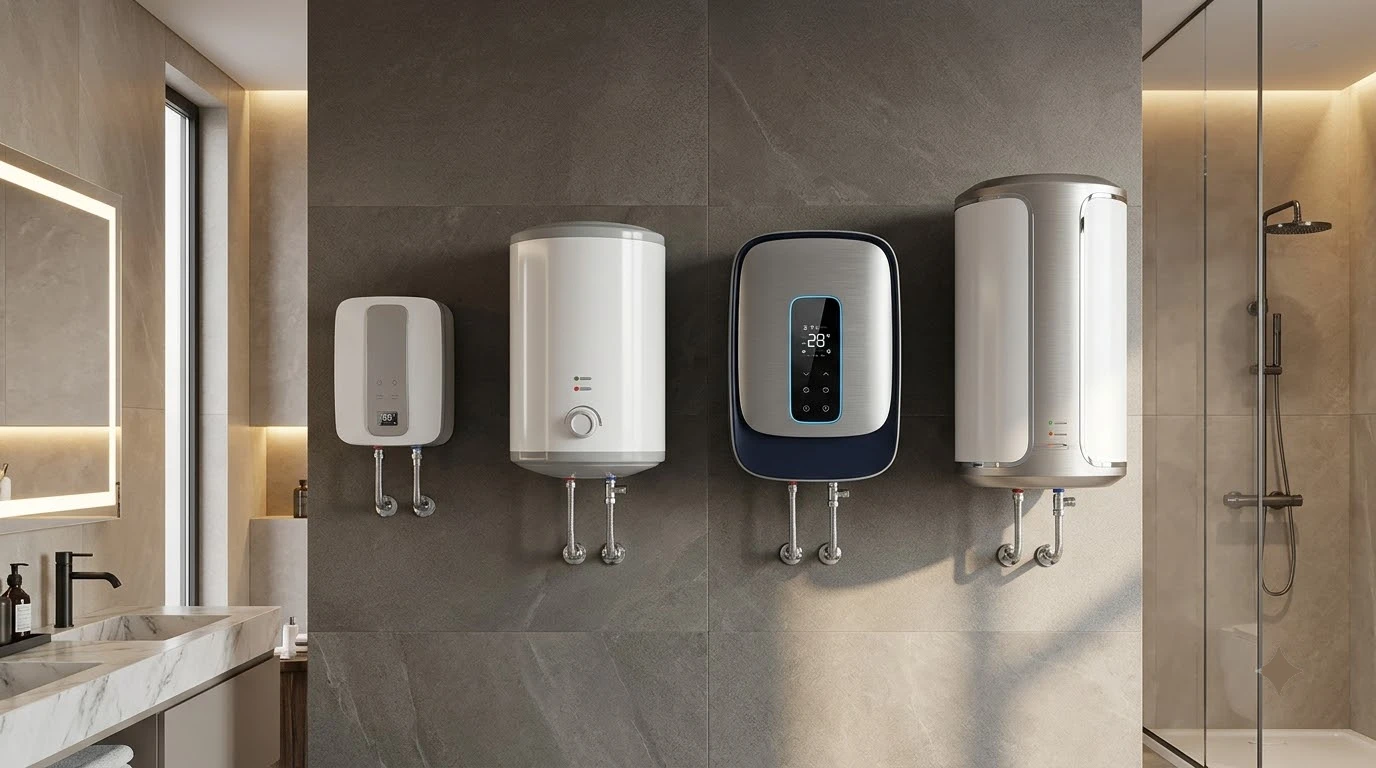
Recommended Geysers & Water Heaters for Home
Explore different types of electric water heaters for your home. Compare instant geysers, storage water heaters and different capacities to find a suitable option for your needs.
How Much Electricity Does a Geyser Consume?
A geyser is a common household appliance, especially during winter when hot water is needed every day. But have you ever wondered how much electricity it uses and how much it adds to your monthly electricity bill? The answer mainly depends on the geyser's power rating (Watts), how long its heating element runs, and how often you use hot water.
For example, a 2000W (2kW) geyser uses 2 units of electricity when its heating element runs continuously for one hour. If the heating element runs for 30 minutes, it uses 1 unit. This is the basic way to understand geyser electricity consumption.
However, a geyser does not always use electricity continuously while it is switched on. Most modern storage geysers have an automatic thermostat. It switches off the heating element when the water reaches the selected temperature and turns it on again when the water cools down. This means the actual electricity consumption can be different from the total time the geyser remains switched on.
Several factors affect how much electricity a geyser consumes:
- Geyser wattage: A higher-wattage geyser uses more electricity per hour while its heating element is running.
- Water temperature: Cold water takes more time and electricity to heat than warmer water.
- Thermostat setting: Higher temperature settings usually require more heating.
- Geyser insulation: Good insulation helps keep water warm for longer and reduces heat loss.
- Hot water usage: Using more hot water means more cold water enters the tank, which may require additional heating.
You can use our Geyser Electricity Bill Calculator to estimate daily, monthly and yearly electricity consumption and cost. Simply enter your geyser wattage, daily heating time and electricity rate to get an estimate.
How to Calculate Geyser Electricity Consumption?
You can calculate geyser electricity consumption using its power rating and the time its heating element runs. Electricity consumption is measured in kilowatt-hours (kWh), commonly known as units on your electricity bill. One unit equals 1 kWh of electricity.
The formula is simple:
Units = (Wattage × Operating Hours) ÷ 1000
If you enter heating time in minutes, use this formula:
Daily Units = (Wattage × Heating Minutes) ÷ 60,000
Example: Calculate the Electricity Cost of a 2000W Geyser
Suppose you have a 2000W geyser and its heating element runs for 30 minutes every day. Your electricity rate is ₹8 per unit, and you use the geyser for 30 days a month. Here is how to calculate its electricity consumption and cost:
- Geyser Power: 2000 Watts (2kW)
- Daily Heating Time: 30 minutes
- Days Used Per Month: 30 days
- Electricity Rate: ₹8 per unit
1. Daily Electricity Consumption:
(2000 × 30) ÷ 60,000 = 1 Unit
2. Monthly Electricity Consumption:
1 × 30 = 30 Units
3. Yearly Electricity Consumption:
30 × 12 = 360 Units
4. Daily Electricity Cost:
1 × ₹8 = ₹8
5. Monthly Electricity Cost:
30 × ₹8 = ₹240
6. Yearly Electricity Cost:
360 × ₹8 = ₹2,880
These figures are estimates based on the heating element running continuously for 30 minutes every day. Actual electricity consumption may vary depending on water temperature, thermostat operation, insulation and hot water usage.
Enter your own geyser wattage, heating time and electricity rate in the calculator above to estimate your household's electricity consumption and cost.
Geyser Electricity Consumption by Wattage
| Geyser Wattage | Daily Heating Time | Daily Consumption | Monthly Units (30 Days) | Est. Monthly Cost (at ₹8/Unit) |
|---|---|---|---|---|
| 1000 Watts (1 kW) | 30 Mins | 0.50 kWh | 15.00 kWh | ₹120 |
| 1500 Watts (1.5 kW) | 30 Mins | 0.75 kWh | 22.50 kWh | ₹180 |
| 2000 Watts (2 kW) | 30 Mins | 1.00 kWh | 30.00 kWh | ₹240 |
| 2500 Watts (2.5 kW) | 30 Mins | 1.25 kWh | 37.50 kWh | ₹300 |
| 3000 Watts (3 kW) | 30 Mins | 1.50 kWh | 45.00 kWh | ₹360 |
15 Litre vs 25 Litre Geyser Electricity Consumption
When choosing a geyser, many people wonder whether a 25-litre model uses more electricity than a 15-litre model. The answer depends on more than just the size of the water tank. To understand geyser electricity consumption, you need to consider two things: tank capacity (litres) and heating power (watts).
Does a 25-Litre Geyser Use More Electricity Than a 15-Litre Geyser?
Tank capacity tells you how much water a geyser can store, while wattage tells you how much electrical power its heating element uses. For example, if both a 15-litre and a 25-litre geyser have a 2000W heating element, both use electricity at the same rate of 2 units per hour while the heating element is running continuously.
However, a 25-litre geyser holds more water. It generally takes more time and electricity to heat a full tank of 25 litres than a full tank of 15 litres when starting with the same water temperature and heating it to the same target temperature.
What Affects Their Electricity Consumption?
- Tank Capacity: A larger tank holds more water and usually needs more energy to heat completely.
- Heating Element Wattage: A higher-wattage heating element uses more electricity per hour, but may heat the water faster.
- Water Temperature: Heating cold water requires more electricity than heating water that is already warm.
- Insulation: Good tank insulation helps keep water warm for longer and reduces heat loss.
- Hot Water Usage: The amount of hot water your household uses affects how often the geyser needs to heat the water again.
Which Geyser Size Should You Choose?
The right geyser capacity depends on your household size, bathing habits and daily hot water requirements. A smaller tank may be suitable when hot water demand is limited, while a larger tank can be more convenient when several people need hot water one after another.
Choosing a geyser that matches your actual hot water needs can help avoid heating more water than necessary. Also consider the geyser's wattage, energy efficiency, insulation and heating requirements before buying.
Key Takeaway: A 25-litre geyser does not automatically use more electricity per hour than a 15-litre geyser. If both have the same wattage, their heating elements consume electricity at the same rate while running. However, heating a larger quantity of water generally requires more total energy.
Use our Geyser Electricity Bill Calculator to estimate electricity consumption and cost based on your geyser's wattage and daily heating time.
How to Reduce Geyser Electricity Consumption?
A geyser can add to your monthly electricity bill, especially when you use hot water regularly during winter. The good news is that a few simple habits can help reduce electricity consumption without giving up your daily hot water needs.
Avoid setting the geyser temperature higher than you actually need. A higher temperature requires more energy to heat the water. Follow the temperature recommendations in your geyser's user manual and be careful with very hot water to avoid accidental burns.
If you do not need hot water throughout the day, consider switching off the geyser after use. When left switched on, the thermostat may turn the heating element on again as the stored water cools. Using a timer or switching it on when needed can help reduce unnecessary reheating and heat loss.
Good insulation helps keep stored water warm for longer. This reduces heat loss and the need for frequent reheating. When buying a new geyser, compare its energy efficiency rating, insulation and standby heat loss information.
A leaking hot water tap wastes both water and the energy used to heat it. When hot water is lost, fresh cold water may enter the geyser and need heating again. Repair dripping taps and leaking shower connections as soon as possible.
Choose a geyser size that matches your household's daily hot water needs. A very large tank may mean heating more water than necessary, while a small tank may not provide enough hot water for everyone. Consider the number of users and their bathing habits before choosing a 10L, 15L or 25L geyser.
Mineral deposits can build up inside a geyser, especially in areas with hard water. Over time, these deposits may affect heating performance. Follow the manufacturer's maintenance instructions and get the geyser checked by a qualified technician when needed.
Avoid heating more water than your household needs. Plan hot water use sensibly and avoid unnecessary reheating between uses. These small changes can help manage your geyser's electricity consumption over time.
Your actual savings will depend on your geyser model, water usage, thermostat settings and electricity rate. Use our Geyser Electricity Bill Calculator to estimate how much your geyser costs to run every day and month.
Frequently Asked Questions About Geyser Electricity Consumption
- How much electricity does a 2000W geyser consume in one hour?
A 2000W (2kW) geyser consumes 2 units of electricity when its heating element runs continuously for one hour. At an electricity rate of ₹8 per unit, this costs ₹16. Actual consumption may be lower if the thermostat switches off the heating element during that time.
- How many units does a geyser consume per day?
Daily electricity consumption depends on the geyser's wattage and the actual time its heating element operates. For example, a 2000W geyser uses 1 unit of electricity if its heating element runs for 30 minutes in a day. If it runs for 60 minutes, consumption is 2 units.
- How much electricity does a geyser consume per month?
A 2000W geyser uses approximately 30 units per month if its heating element runs for 30 minutes every day for 30 days. At 45 minutes per day, it uses 45 units, while 60 minutes of daily heating uses 60 units. These estimates assume continuous operation at the rated power during the specified heating time.
- How much does it cost to run a 1500W geyser?
A 1500W (1.5kW) geyser consumes 0.75 units if its heating element runs for 30 minutes. At ₹8 per unit, this costs ₹6 per day. If used for 30 days, the estimated monthly electricity cost is ₹180. Actual costs depend on heating time and your electricity tariff.
- Does a 25-litre geyser consume more electricity than a 15-litre geyser?
Not necessarily. The wattage of the heating element determines how much electricity a geyser uses per hour while heating. However, a 25-litre geyser holds more water than a 15-litre model, so heating a full tank from the same starting temperature to the same final temperature generally requires more total energy. Actual consumption also depends on insulation, water temperature and usage.
- Does a geyser consume electricity when it is switched on?
A geyser uses most of its electricity when the heating element is active. Once the water reaches the selected temperature, the thermostat switches off the heating element. If the geyser remains switched on, the thermostat may turn it on again when the water cools. The appliance may still use a small amount of electricity for its controls.
- How can I reduce my geyser electricity bill?
You can manage your geyser electricity bill by avoiding unnecessarily high temperature settings, switching off the geyser when hot water is not needed for long periods, fixing leaking hot water taps and choosing a suitable tank capacity. Good insulation and regular maintenance can also help reduce unnecessary heat loss and energy use.
- How do I calculate the electricity cost of a geyser?
First, multiply the geyser wattage by its daily heating time in minutes and divide by 60,000 to calculate daily electricity consumption in units. Then multiply the units by your electricity rate to find the daily cost. Formula: Daily Cost = (Wattage × Heating Minutes ÷ 60,000) × Electricity Rate. For monthly cost, multiply the daily cost by the number of usage days.